
Every Christmas season brings stories—some tender, some exaggerated, some clearly the product of sentiment. But occasionally there emerges an account so stark and immediate, resistant to explanation, that even hardened professionals pause.
This is one of those (for your discernment).
It occurred not centuries ago, not in a distant land, but in a modern American hospital on Christmas Eve.
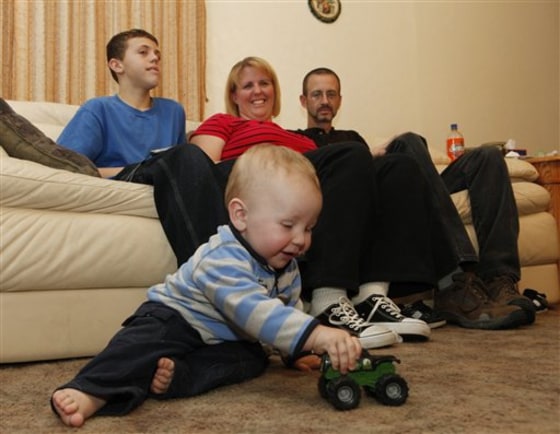
Tracey Hermanstorfer and her newborn son Coltyn.
Memorial Hospital, Colorado Springs, Colorado.
Christmas Eve, 2009.
A baby boy was delivered after severe complications. The umbilical cord had been compromised. Oxygen had been cut off. At birth, the infant showed no signs of life. No heartbeat. No breathing. No detectable neurological response.
Tracey herself was near death. “Hermanstorfer was at his wife’s side when her heart stopped beating,” noted NBC. “He thought he had lost both her and their newborn son. But doctors revived Coltyn in his father’s arms. And then a nurse told Hermanstorfer his wife’s pulse had inexplicably returned and that she would probably survive.”
Doctors initiated resuscitation immediately.
Minutes passed.
Then more minutes.
By every accepted medical standard, the window for recovery closed.
Hospital staff prepared to pronounce death.
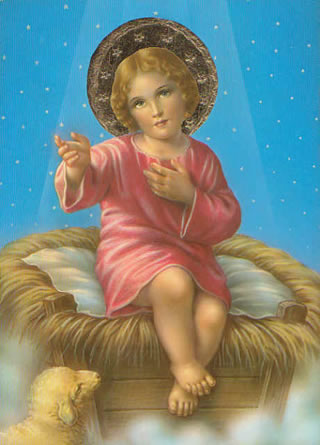
But the father—a devout Christian—did not accept that conclusion. He prayed. Not generally nor vaguely but specifically, invoking the Infant Jesus because it was Christmas Eve.
He asked for life where none remained.
Nurses later testified that the room became strangely still.
Then—without intervention and explanation—the baby’s heart began to beat.
But rhythmically, and not weakly, nor intermittently.
Breathing followed.
Color returned.
Monitors began registering brain activity.
Physicians were stunned.
One reportedly said quietly, “This doesn’t happen.”
In the days that followed, doctors waited for the inevitable neurological damage—damage that should have been profound after such prolonged oxygen deprivation.
It never appeared.
Examinations showed the child fully intact neurologically.
The baby went home healthy.
Alive.
The hospital recorded the event as a medical anomaly—the language used when medicine reaches its limits (and knowledge). [scroll for more:]
No press conference was held.
No campaign followed.
No shrine was built.
And that, perhaps, is the point.
Because Bethlehem itself was ignored by most of the world.
Believers note a pattern in authentic miracles: they do not announce themselves but occur in obscurity, often involving children and arriving when human effort has been exhausted. They leave in their wake awe, not spectacle.
From a faith perspective, this event mirrors the first Christmas in a striking way.
Life where death had claimed victory.
Hope born when all doors were closed.
A child returned to the world through mercy, not force.
Skeptics may search for explanations. Medicine may refine its terminology. But those present knew something had occurred beyond charts and protocols.
The miracle was not only that the child lived.
It was when.
Christmas is not merely a commemoration of something that once happened. It is a reminder that God still enters the world quietly—often unnoticed—still choosing life, still answering prayer, still coming when it seems too late.
Bethlehem was not the last time.
So it is that often the greatest Christmas miracles are not those shouted from rooftops—but those whispered in hospital corridors, known fully only to the families who carry them for the rest of their lives.
[resources: A Life of Blessings]