
From Insights Integration:
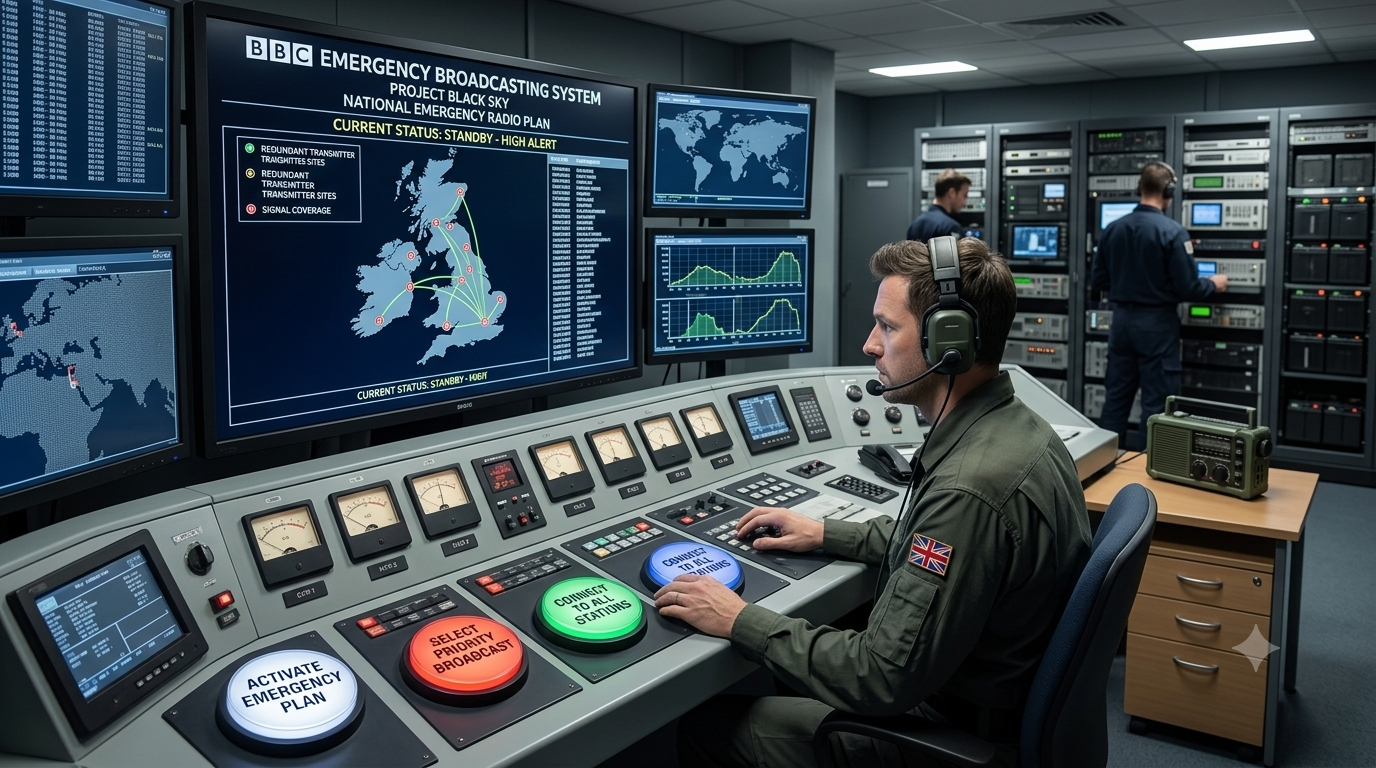
At the heart of the plan is a dedicated emergency radio studio staffed by approximately 100 BBC personnel. This facility is designed to operate completely independently of the internet and conventional power grids. It features secure communication lines, along with stockpiles of fuel, water, and food sufficient for at least three days without resupply. The studio’s primary role is to broadcast pre-arranged government messages to the public. These scripts, already prepared and in some cases published online, deliver practical survival guidance — such as recommended daily water intake and methods for disposing of toilet waste when flushing is impossible.
Broadcasts would primarily use FM radio, chosen for its resilience: it functions almost everywhere even during blackouts or crippling cyber-attacks. Transmission towers are isolated from the internet and equipped with diesel generators holding between 5,000 and 40,000 litres of fuel, enabling roughly three days of continuous operation. Additional reporting would come from journalists operating satellite vehicles stationed at emergency centres across the UK, continuing as long as diesel supplies last. Teams would coordinate via satellite phones, with pre-agreed protocols and meeting points as backups if those fail.