
From AP:
An independent researcher claimed on Wednesday that a marble bust of Christ in a Roman church is by Michelangelo, the latest purported attribution to the Renaissance genius who is one of the most imitated artists in the world. The unverified claims by Valentina Salerno has unsettled Renaissance scholars, especially since a recent sketch of a foot that was attributed to Michelangelo, but disputed by some as a copy, recently fetched $27.2 million at a Christie’s auction.
Given the stakes — and Salerno’s suggestion that several other works can now be attributed to Michelangelo based on her documentary research — many leading experts have declined to comment.
From Yahoo:

Renaissance artist Michelangelo ordered many of his artworks to be hidden by his pupils in a secret room to protect them for posterity, an Italian researcher claimed Wednesday. According to renowned art historian Giorgio Vasari, the Italian genius burned a large number of his own drawings and sketches before his death in Rome in 1564.
But researcher Valentina Salerno says she has unearthed unpublished archival documents that reveal a plot to squirrel away his works. “One of these three unpublished documents I found in the archives speaks of a room” kept by students of the Michelangelo school, the origins of which “can be traced back” to the artist, Salerno told AFP on the sidelines of a press conference in Rome.
From the London Independent:
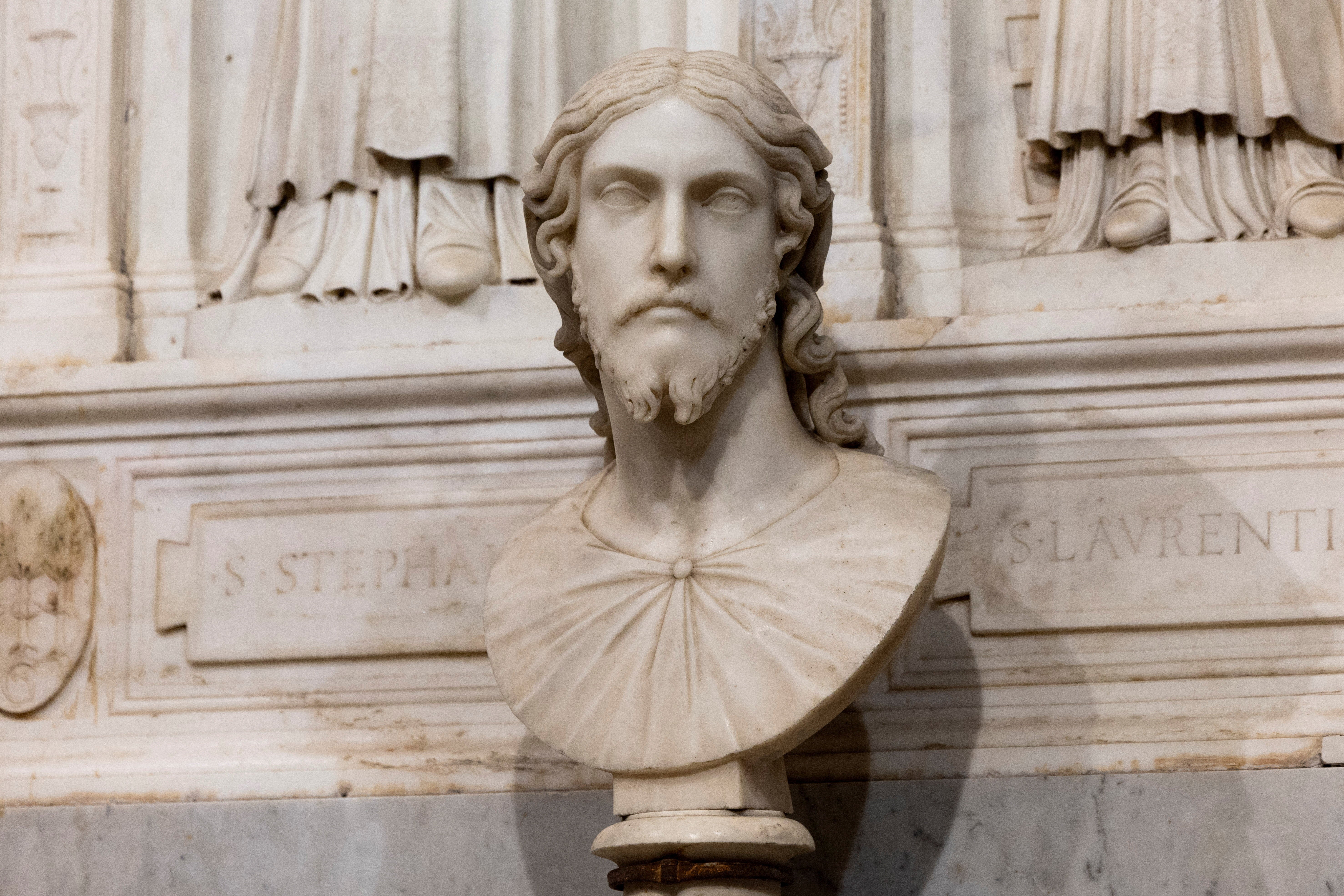
A marble bust depicting Christ the Saviour, which has stood for centuries in a Roman basilica, has been re-attributed to Renaissance master Michelangelo after nearly 200 years of obscurity. The sculpture, housed in the Basilica of Sant’Agnese fuori le mura on Rome’s ancient Via Nomentana, had been associated with Michelangelo until the early 19th century before its origins became unknown.
Italian independent researcher Valentina Salerno, a member of the Vatican committee celebrating the 500th anniversary of Michelangelo’s birth, is credited with the re-attribution. Franco Bergamin, from the Order of Lateran Canons Regular, expressed his surprise at the discovery, stating: “We have lived here since 1412, and the monumental complex of Sant’Agnese always holds surprises — this is one of them.”