The connection between Iran and the Virgin Mary—a surprising one—is a winding mix of ancient legend, linguistic “coincidences,” and modern spiritual phenomena.
While the Vatican has never formally recognized a site of Marian apparition within Iranian borders, the city of Urmia holds a claim to one of the world’s oldest Christian miracles.
Local tradition at the Church of Saint Mary there suggests the site was originally a Zoroastrian fire temple.
 A Chinese princess, who contributed to its reconstruction in 642 AD, has her name engraved on a stone on the church wall. (The famous Italian explorer Marco Polo described the church in his visit.)
But the key point? Legend says that when the Three Magi returned from Bethlehem after witnessing the miraculous birth of Christ, they converted their temple into a church dedicated to Mary.

The involvement of the Three Magi creates, of course, a direct historical and spiritual bridge between the Persian Empire and the very first accounts of the Nativity.
Beyond that nugget of ancient history is a profound symbolic link in the name of the world’s most famous apparition site: Fátima, Portugal.
That Portuguese hamlet was named, during a Muslim invasion of southern Europe, after a Moorish princess whose moniker in its turn belonged to Fátima, al-Zahra, daughter of the Prophet Muhammad and the most revered female figure in Iranian Islam of the Shia denomination.
Scholars like Bishop Fulton Sheen have argued that the Virgin Mary’s choice to appear at a site bearing this name was deliberate, a “miraculous” bridge intended to reach the Muslim world.
In Iran, Fátima, al-Zahra is celebrated as “the leader of all women in paradise,” a title strikingly similar to the Catholic view of Mary as the “Queen of Heaven.”
She also is often described with titles similar to Mary’s, such as “The Immaculate” or “The Radiant,” leading to a unique cross-cultural veneration where Mary is seen as a sister-soul to the most holy woman in Persian spirituality.
In a more contemporary and “miraculous” context, the rapid growth of the underground church in Iran is frequently attributed by its members to supernatural interventions. Many Iranian converts report having dreams or visions of a luminous woman or a “Man in White” that lead them toward Christianity.
While these are personal experiences rather than public, church-sanctioned apparitions, the sheer volume of these reports is often cited by missionary groups as a modern-day miracle of mass conversion.
The “Surah Maryam” in the Koran ensures that the miraculous virgin birth remains a core tenet of faith for all Iranians, regardless of their specific religion, making the figure of Mary a constant, hallowed presence in the Iranian landscape.

Thaddeus Monastery, also known as the Qara Kelisa (the “Black Church”), is one of the oldest and most notable surviving Christian monuments in Iran. This quiet, isolated monastery located in the wilderness hinterlands of ancient Armenia is believed to stand on the site of the martyrdom and/or burial of the Apostle Thaddeus, or Jude.
That’s revered by both the Oriental Orthodox and Assyrian Orthodox Churches, especially members of the Armenian Apostolic Church.
For the last three decades, the monastery has been under the jurisdiction of the Iranian government, and Christians are permitted to visit on only one day every year, the Feast Day of Saint Thaddeus.
[Footnote: Zoroastrianism is one of the world’s oldest monotheistic religions, founded in ancient Persia around the fourth century B.C. by the prophet Zoroaster and focusing on the worship of the “Wise Lord” and the moral dualism between truth and falsehood. Followers live by the creed of “Good Thoughts, Good Words, Good Deeds.”]
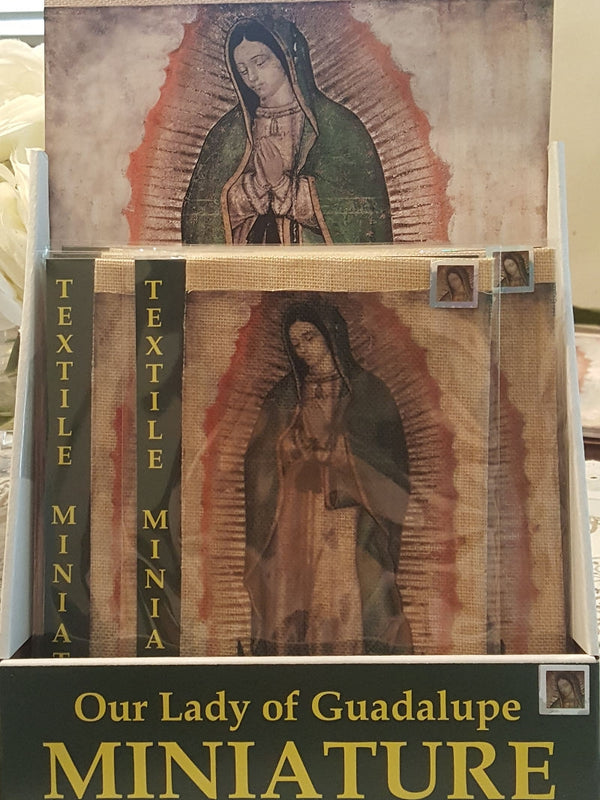
[Resources: miniature tilmas:]