
We all know about the sex trafficking and financial wheeling-and-dealing, the money laundering, the connections with intelligence agents and everyone from the president of Harvard to the president of the United States.
We know the temporal, the sublunary, side of Jeffrey Epstein.
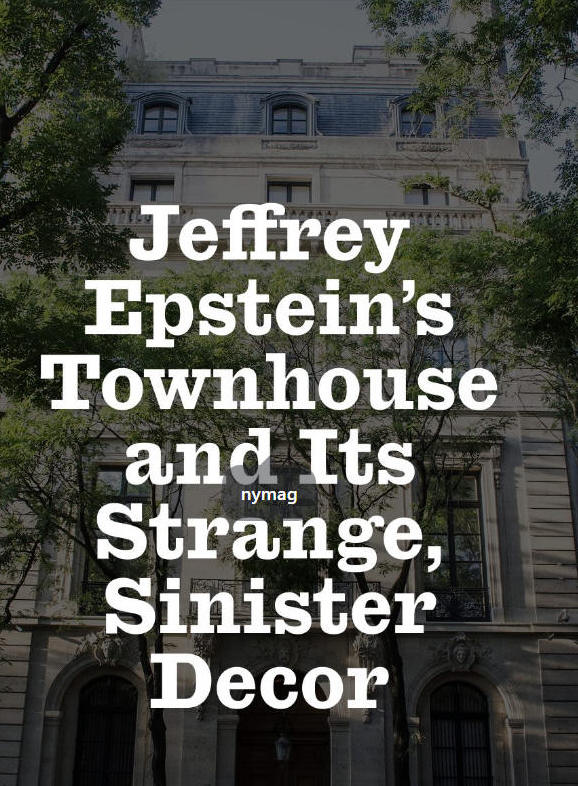
But was there also a dark spirit involved? Was there not a strange temple-like structure on his Caribbean island, and bizarre artifacts there and in his massive Manhattan townhouse?
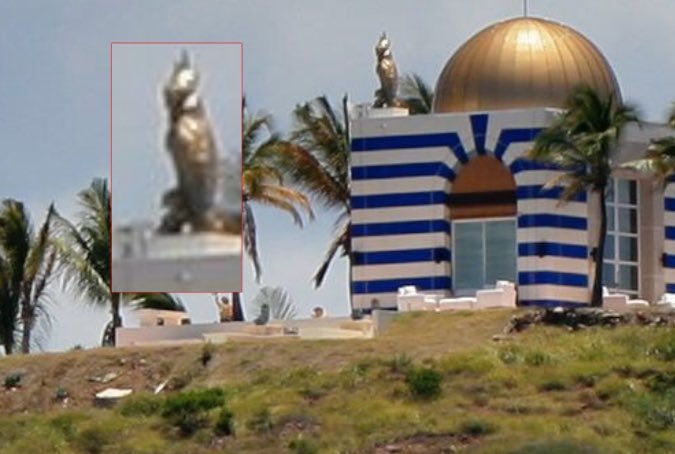
Much more is bound to surface in years to come. It won’t be a pretty picture.
We already know one thing: one of Epstein’s closest partners and backers was a multi-billionaire named Leslie Wexner with close ties to Israel who owned Victoria’s Secret, The Limited, Abercrombie & Fitch, and other companies. Wexner was the one who “sold” the mansion to Epstein (for $1).
In his case, we know a demon was involved, because he said so publicly.
Jewish folklore is full of stories about demonic beings. Demons frequently take form, in that lore, of cats or black dogs.
[scroll for more:]
It is said that sometimes they attach themselves to lost, dead souls who, for one reason or another, had not been able to transmigrate successfully.
The demon would then guide the renegade soul into the body of a living person.
This gave the soul a refuge, and the demon an opportunity to take control of the possessed person’s body.
They call such demons/earthbound influences dybbuk.
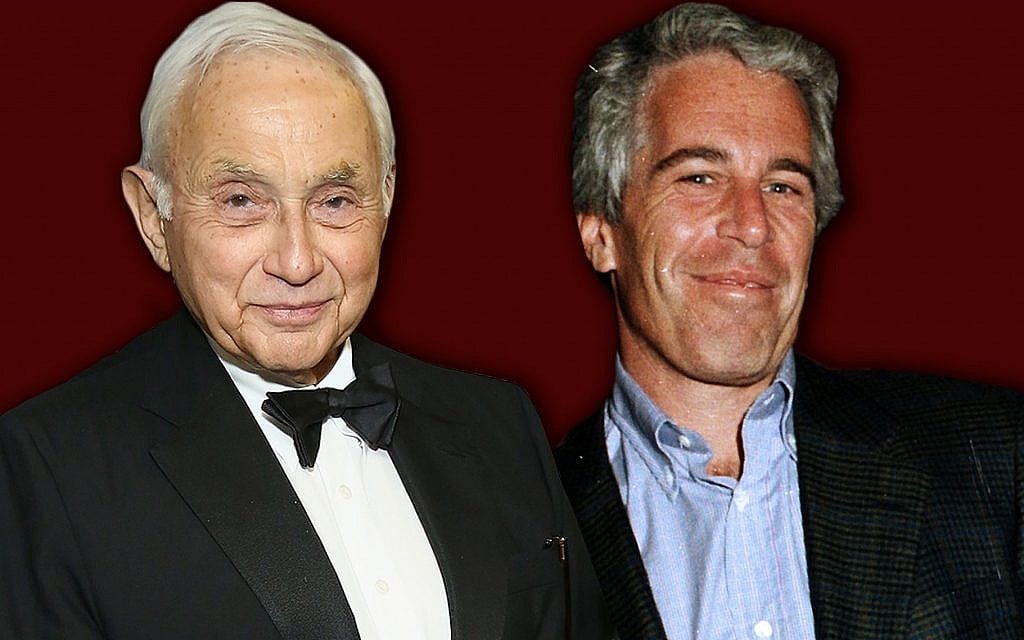
Epstein, we note in a book, One Nation Under Blackmail, that he told New York Magazine that Wexner has a dybbuk and it makes him “wander from house to house,” “wanting more and more” and “swallowing companies larger than his own.”
“In other words, it compels him to accumulate more money and more power with no end in sight. Wexner later describes the dybbuk as an integral ‘part of his genius.'”
As in “genie”?
Wexner further describes his personal spirit as keeping “him out of balance, emotionally stunted, a part of him – the precious, treasured boy-son part – lagging behind [the dybbuk].”
This is consistent, points out the author, Whitney Webb, with other definitions of the term in Jewish media, including an article in the Jewish Chronicle that defined the term as “a demon [that] clings to [a person’s] soul.”
“Per Wexner’s word choice and his characterization of what he perceives as an entity dwelling within him, the entity – the dybbuk – is dominant while his actual self and soul ‘lags behind’ and is stunted, causing him to identify more with the entity than with himself,” notes Webb, an intrepid reporter.
The New York piece, which can be viewed here, opens as follows: “On the morning Leslie Wexner became a billionaire, he woke up worried, but this was not unusual. He always wakes up worried because of his dybbuk, which pokes and prods and gives him the itchiness of the soul that he calls shpilkes [“pins” in Yiddish]. Sometimes he runs away from it on the roads of Columbus, or drives away from it in one of his Porsches, or flies from it in one of his planes, but then it is back, with his first coffee, his first meeting, nudging at him.”
The name of the dybbuk that latched itself around Leslie Wexner’s soul when he was four years old supposedly was Tharamasheekkeityotel [תרעמאשהקיייוטאל].1
Concluded the fawning article, “Les Wexner picks up his heavy black case and flies off in his Challenger, with his dybbuk sitting next to him, taunting and poking him with impatience, that little demon he really loves. The dybbuk turns his face. What does he look like? ‘Me,’ says Leslie Wexner.”
For your discernment. (Pray for these men, pray for our country.)
+
[resources: Prayer of the Warrior]