It doesn’t seem likely—possible—yet it’s true.
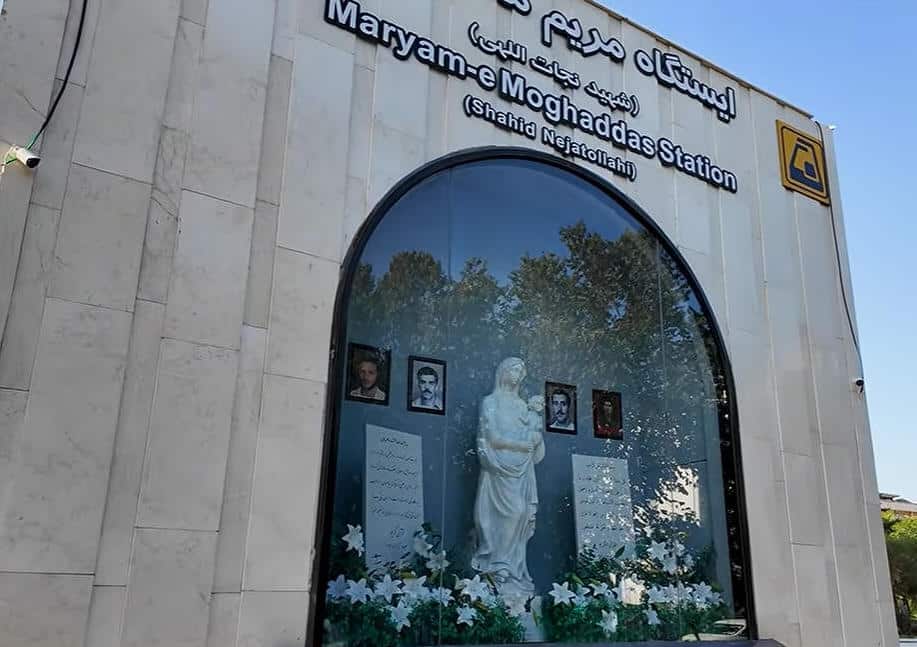
Last October Tehran opened a metro subway station in the heart of its modern downtown dedicated to the Blessed Virgin Mary (Maryam-e Moqaddas).
It’s on Line 6 to honor the mother of Jesus and signal respect for the city’s Christian minority.
The station features a magnificent domed concourse, vaulted church-like ceilings, and an eight-foot statue of Mary encased in glass at the street entrance.
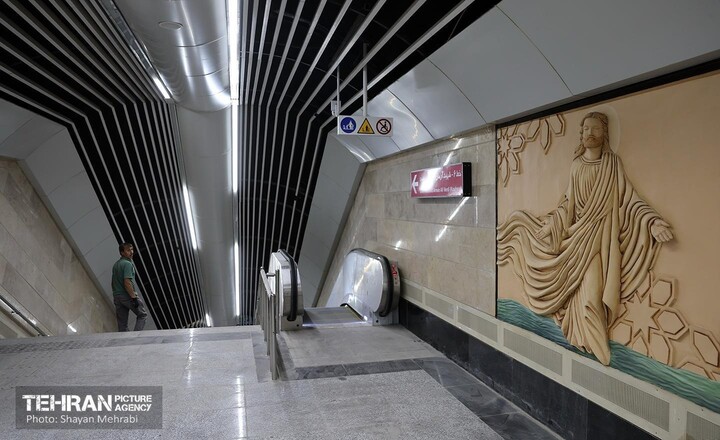
Inside are large murals of angels and Jesus walking on water.
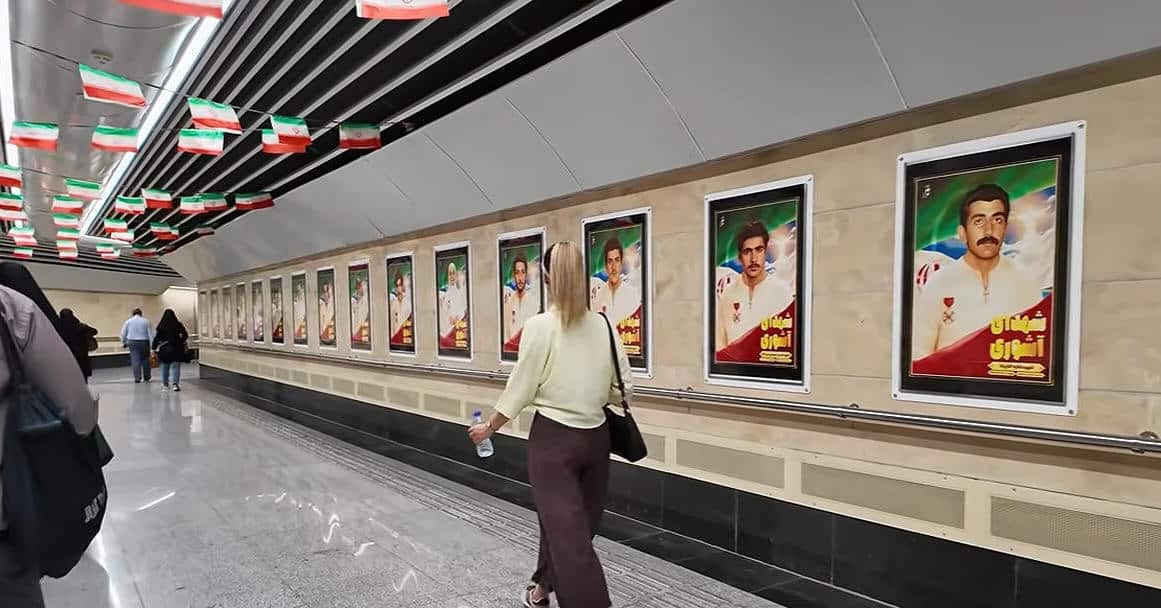
There is even a long wall of photographs of recent Christian martrys.
Positioned near the prominent St. Sarkis Armenian Cathedral, the station was specifically designed to resemble a Christian church as a tribute to the city’s large Armenian population.
Traditional Persian floral designs mingle with images of white doves and olive trees, creating an unusual blend of Christian and Islamic artistic traditions.
Iranian officials have presented the station as a symbol of religious harmony, noting that Mary (known as Maryam in Islam) occupies an exalted position in both Christianity and the Muslim faith. Indeed, an entire chapter of the Quran, Surah Maryam, bears her name. Local Armenian Christian clergy and community representatives have welcomed the architectural tribute as a gesture of respect.
This does not excuse the tremendous radicalism in segments of Iranian society and leadership, and the extreme treatment of Christians and Muslim women in many parts of Islam. Indeed, acts of terrorism against Christians in places like Nigeria are exploding.
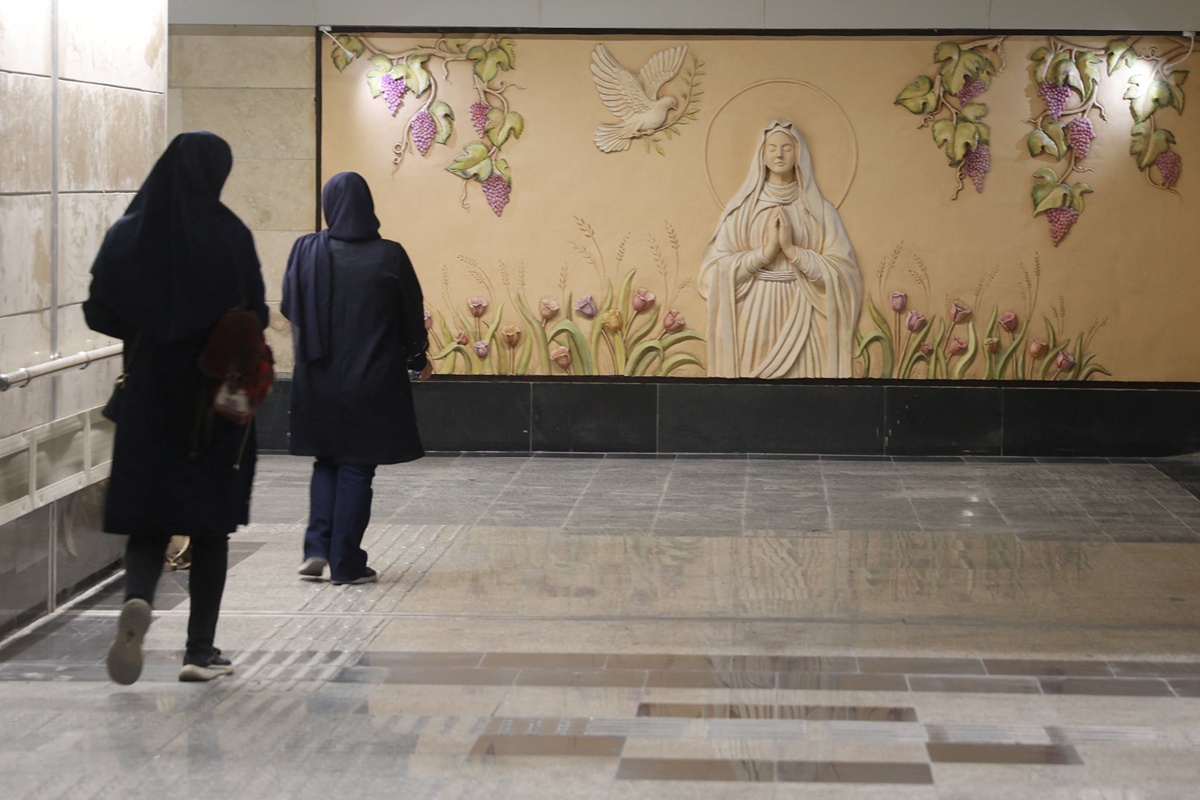
Yet here in Tehran is a striking contrast. While the Blessed Mother is being publicly honored in this predominantly Muslim nation, human rights organizations and international analysts continue to view the project with skepticism, describing it as a symbolic gesture that contrasts with ongoing restrictions and pressures affecting Iran’s religious minorities.
Whatever the political implications, the spectacle of a monumental statue of the Virgin Mary in an Iranian subway station remains a remarkable reminder of how far devotion to the Mother of Jesus extends.
+