
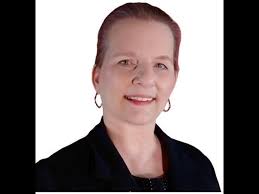
Raised in a Midwestern Catholic family, Paula says her early faith was simple and childlike. As a young girl, she remembers looking at the Crucifix in church and wondering when Jesus would “come down from the cross,” not yet understanding the meaning of the Passion.
At about six years old, she says she once felt the Presence of God the Father in her room and, in childhood innocence, told Him she wanted to “marry” His Son Jesus one day.
Not long afterward, according to her account, she experienced a frightening spiritual deception. While lying in bed and hearing her parents arguing downstairs, she says a dark presence entered the room and persuaded her to take a large amount of children’s aspirin, telling her it would make her only a little sick and would stop the argument.
Instead, she became severely ill, struggled to breathe, and then everything went “blacker than black.”
That, she says, was the beginning of her first near-death experience.
She describes being swept through a vast tunnel filled with stars, planets, lights, and what she interpreted as angels, moving with tremendous speed but in complete peace.

Then, suddenly, she found herself in a heavenly landscape — bright, warm, alive, and filled with colors more vivid than earthly colors. She saw grass, flowers, trees, hills, a snowcapped mountain, and a sense of life in everything around her.
In that experience, she says she was taken to what appeared to be a heavenly “planning” area, where angels stood around a large table. On it, she says, was something like a three-dimensional model of her life, showing paths, choices, people, and outcomes.
The angels, she says, explained that decisions made on earth affected what happened along the path. She understood this as a heavenly coordination of free will, divine providence, and the unfolding of a person’s life.
She also says she entered a great building and glimpsed what she later understood as the throne room of God. She describes a sapphire-like floor, heavenly light, angelic beings, singing, and creatures that reminded her of the descriptions in the Book of Revelation.
She says she also saw a heavenly library containing “books” of people’s lives, though she was not permitted to see her own.
Eventually, she says she was returned to her body. She woke the next day feeling ill but did not tell her family what had happened. Later in life, she would interpret the experience as a real encounter with Heaven — one that left her convinced of the reality of God, angels, spiritual warfare, and the importance of each soul’s earthly choices.
She also recounts other moments of what she believes were angelic protections: being moved out of danger as a child, hearing a warning voice that may have saved her from a predator, and surviving painful family circumstances and later spiritual attacks.
Where her testimony becomes especially unusual is in what she says she was shown about time, prayer, and the “end times.”
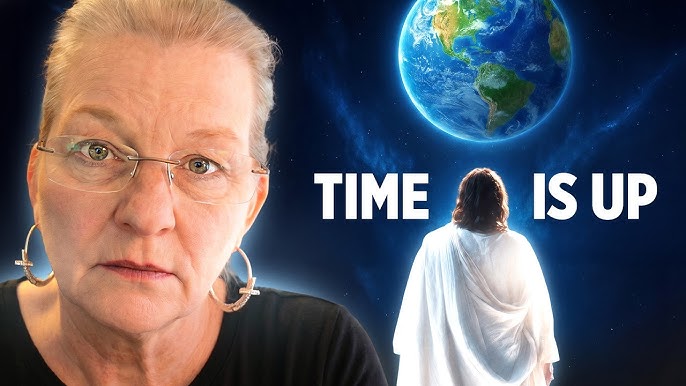
Langhoff says that in Heaven she was shown a timeline — not only of her own life, but of events connected to the larger unfolding of history.
Her striking claim is that the end-times timeline is not entirely fixed in the way many people assume. Certain things, she says, are set, but the timing and the spiritual “length” of the period can be affected by the choices, prayers, and faithfulness of believers.
This gives us all the more motive and urgency to pray—that the final denouement is stretched.
In her words, believers are not helpless spectators waiting for darkness to fall. She says Christians, through prayer, holiness, repentance, and obedience to God, help “hold back” darkness.
If believers are fruitful, faithful, and glorifying God, she says, more time can be given for souls to be saved. But if believers grow passive, distracted, or worldly, darkness advances more quickly.
She connects this with the idea that “the time is at hand” — not merely meaning that the end is near, but that time is, in a mysterious way, “in our hands” through prayer and cooperation with God.
She emphasizes that this does not mean human beings control God, but that God allows human response to matter. Prayer, in her telling, is not symbolic; it has real effects in the spiritual realm.
She warns that many are focusing heavily on frightening subjects — demons, Nephilim, darkness, and end-times speculation — but says the more important question is whether people are walking with Jesus Christ.
Those outside Christ, she says, may see terrifying things as darkness increases. But for believers, the call is not fear; it is prayer, repentance, faithfulness, and helping extend mercy so that more souls may be saved.
Her message, in summary, is that the end times are serious, but not a reason for panic. They are a call to intercession.
The faithful, she says, should not merely watch signs unfold, but actively pray, obey God, and bring His light into the world while there is still time.
As with all such private testimonies and near-death accounts, discernment is needed. And there are frightening things (see the current “Special Report”). But Langhoff’s central emphasis is clear: Heaven is real, spiritual warfare is real, human choices matter, and prayer may have more power over the course of events than most people realize.
—————————
[resources: afterlife books]